MSAI-Path
Microsatellite instability (MSI) is an important biomarker in colorectal cancer, influencing both prognosis and treatment decisions. Current approaches for predicting MSI from routine H&E-stained whole slide images rely on end-to-end deep learning “black-box” models with limited interpretability. Meanwhile, experienced pathologists can intuitively identify MSI through specific histological features, captured in manual scoring systems like MS-Path. In this work, published in Modern Pathology, we present a hybrid approach that combines computational and pathologist expertise. Nuclei and tissue segmentation models automatically quantify MSI-associated features outlined in the Bethesda guidelines, such as intraepithelial lymphocytes, tumor grade, mucinous component, and tertiary lymphoid structures. These features are then combined with clinical data in simple, interpretable classifiers. Validated on 3,256 whole slide images from 2,267 patients across seven cohorts from five centers, the method reaches an AUC of up to 0.88 on resections and 0.90 on biopsies, on par with published black-box models while remaining fully explainable and verifiable.
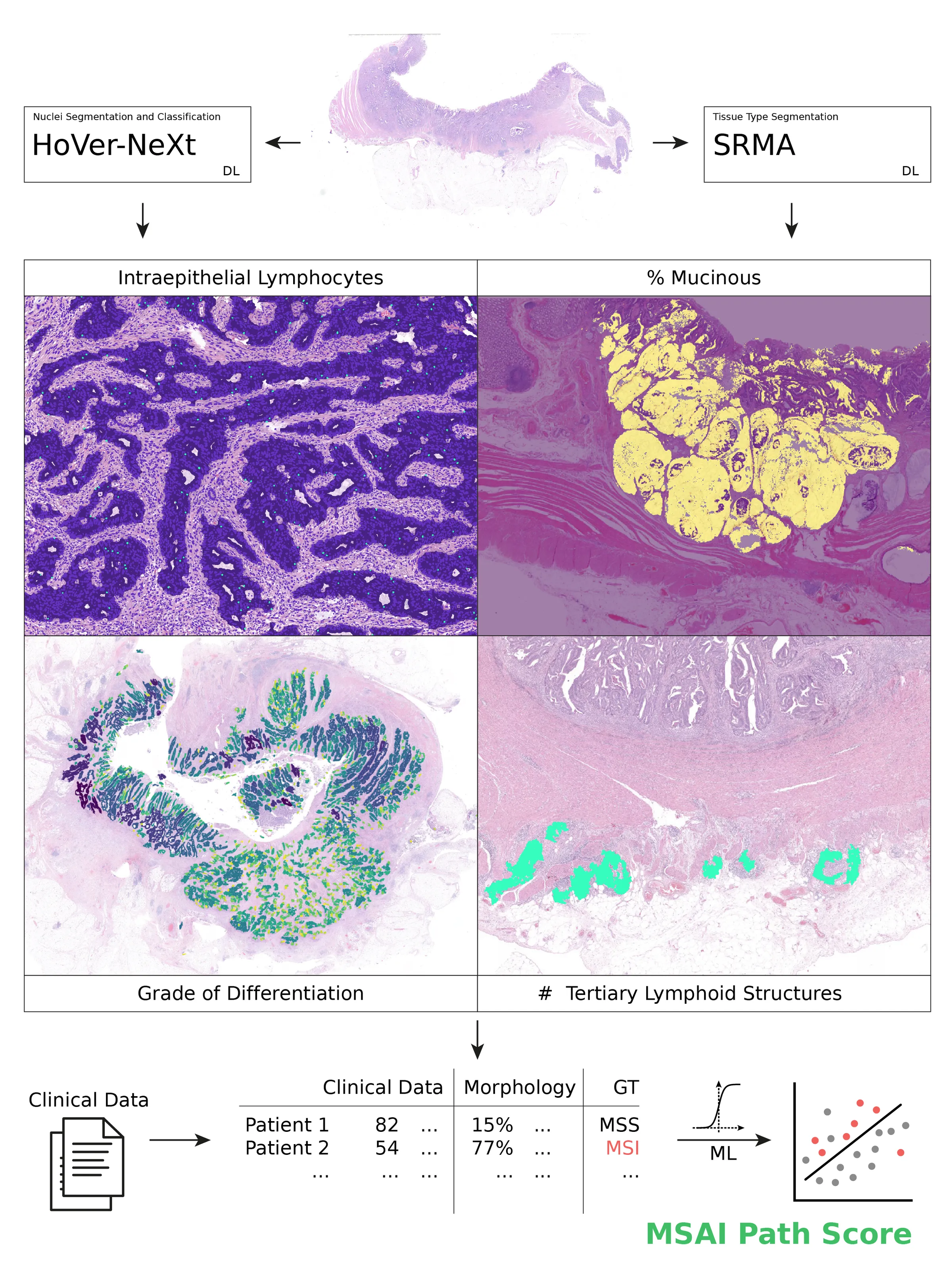
Instead of training a single end-to-end network, we use established segmentation models, HoVer-NeXt for nuclei segmentation and classification and a tissue type segmentation model, to automatically quantify the morphological features that pathologists already use for MSI assessment. Each feature was validated against annotated datasets before being integrated, together with clinical variables, into logistic regression and random forest models predicting MSI status.
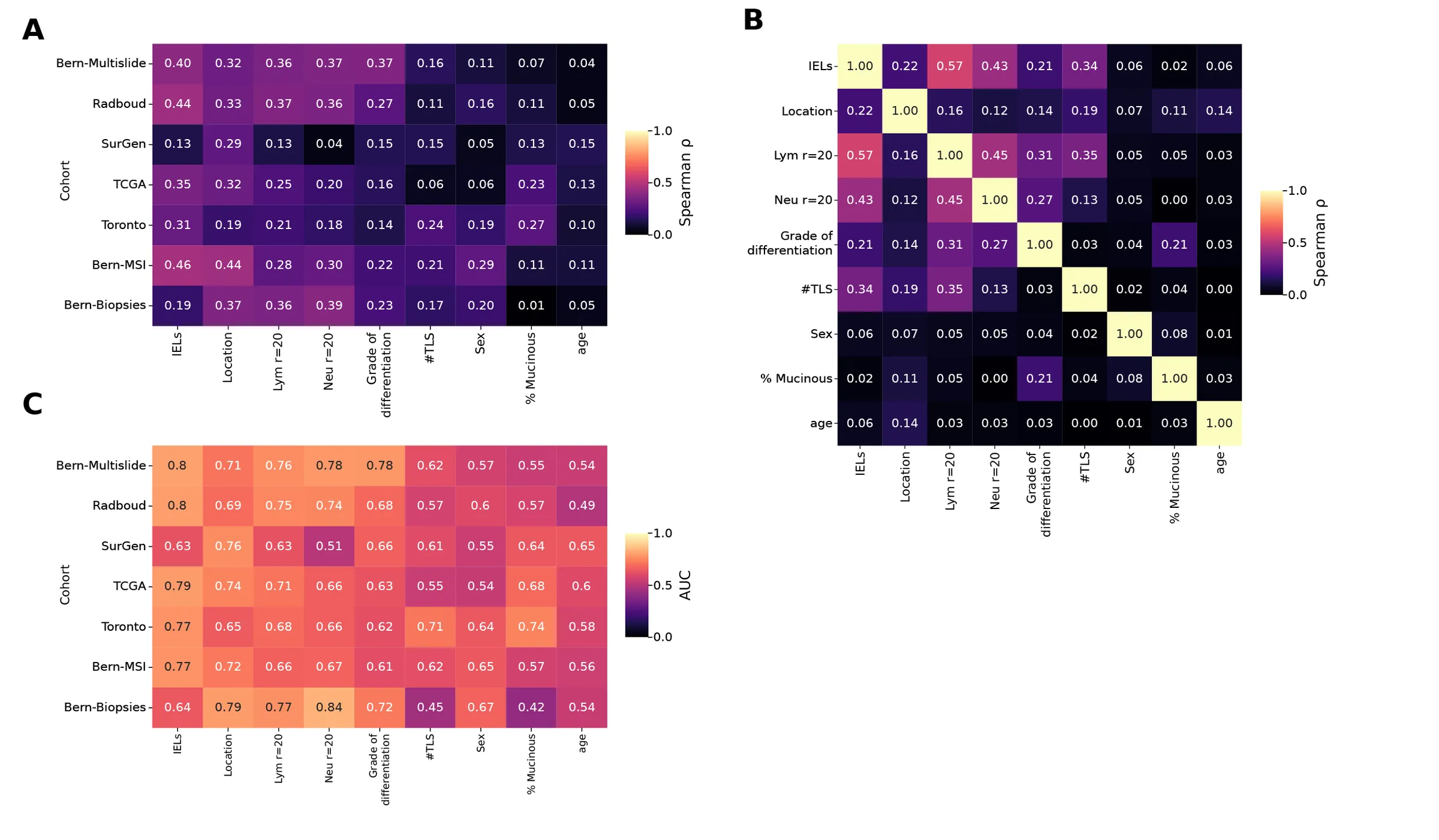
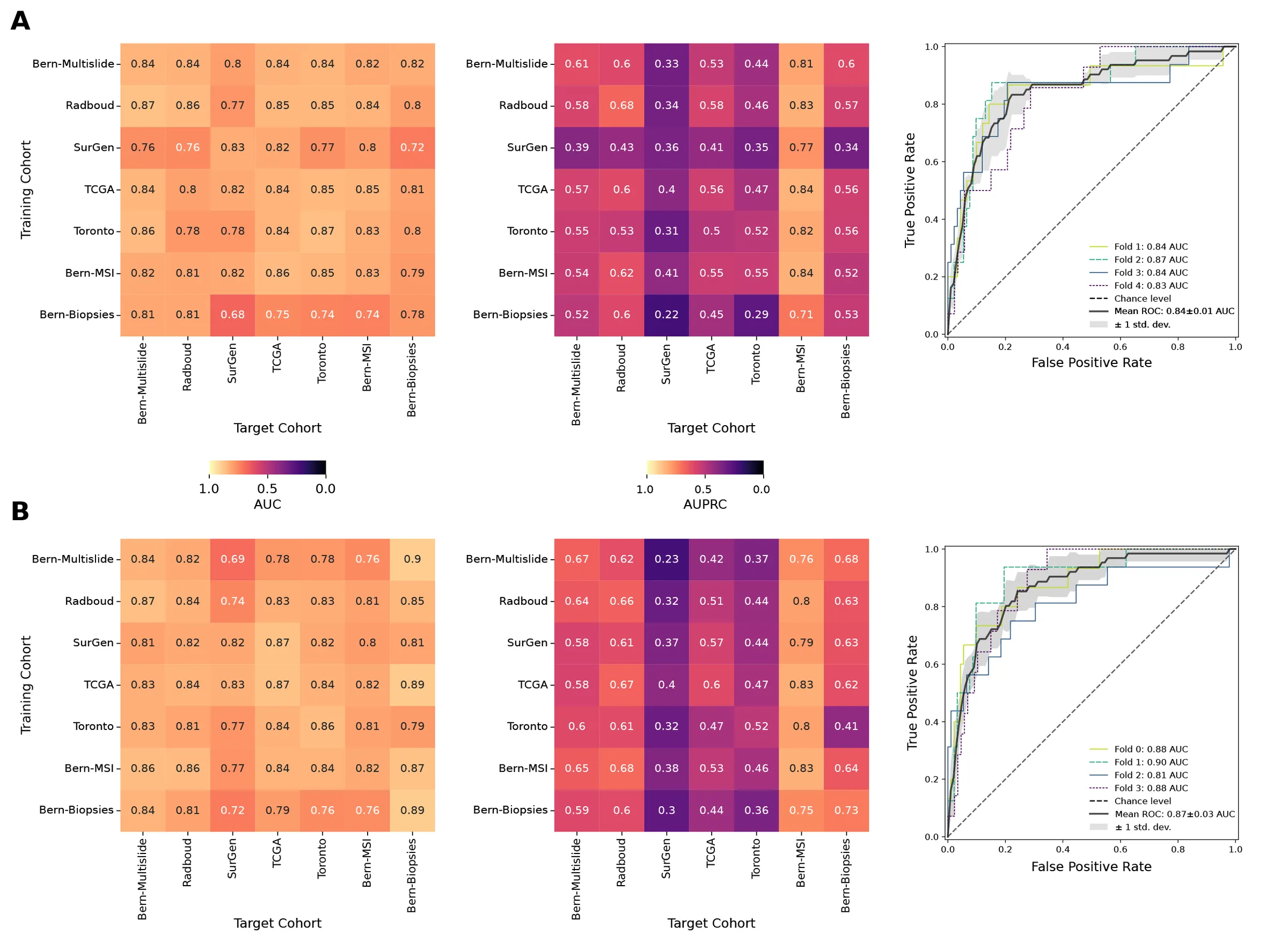
The learned variable importances strongly correlated with manual scoring systems such as MS-Path and aligned with individual pathologists’ assessments. This confirms that the model “re-invents” neither the wheel nor the pathologist, but rather formalizes existing diagnostic expertise into a reproducible computational pipeline.
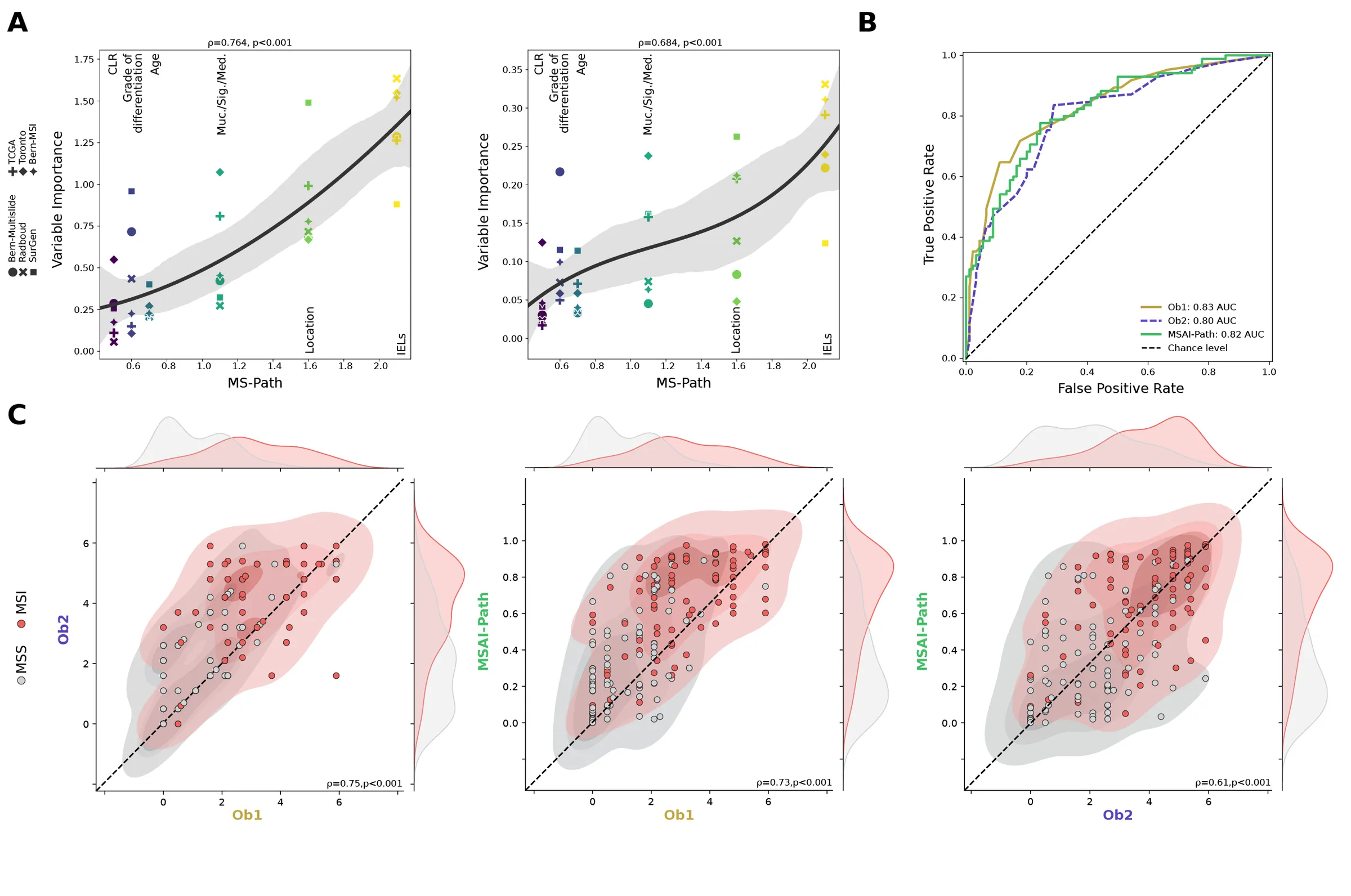
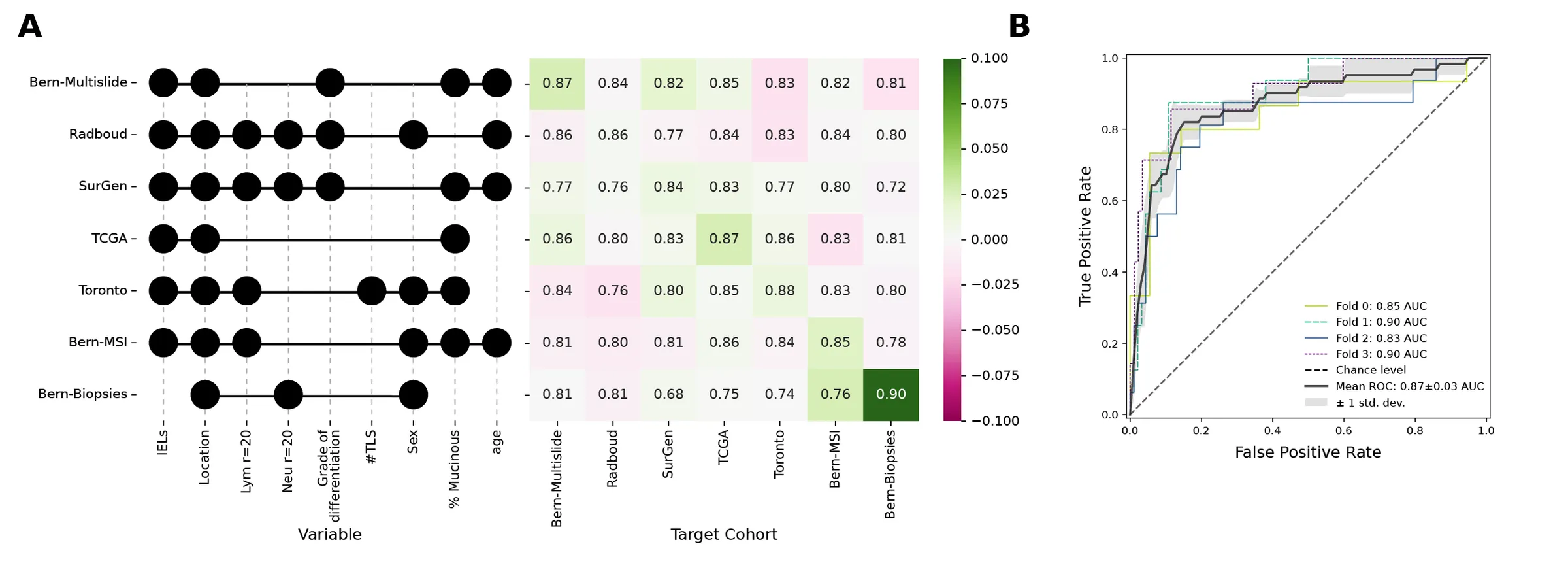
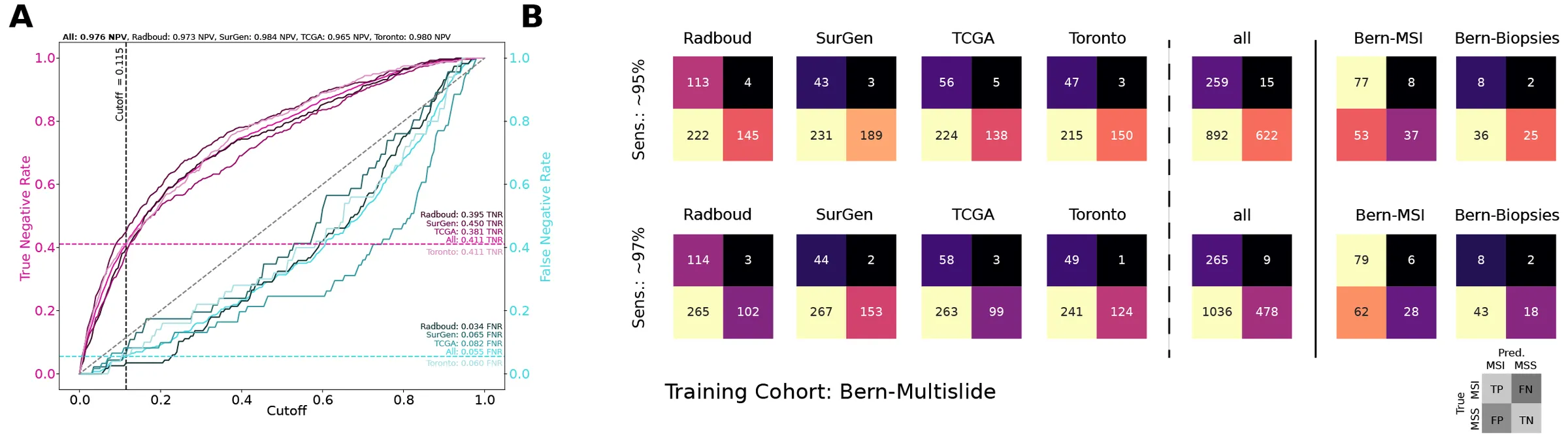
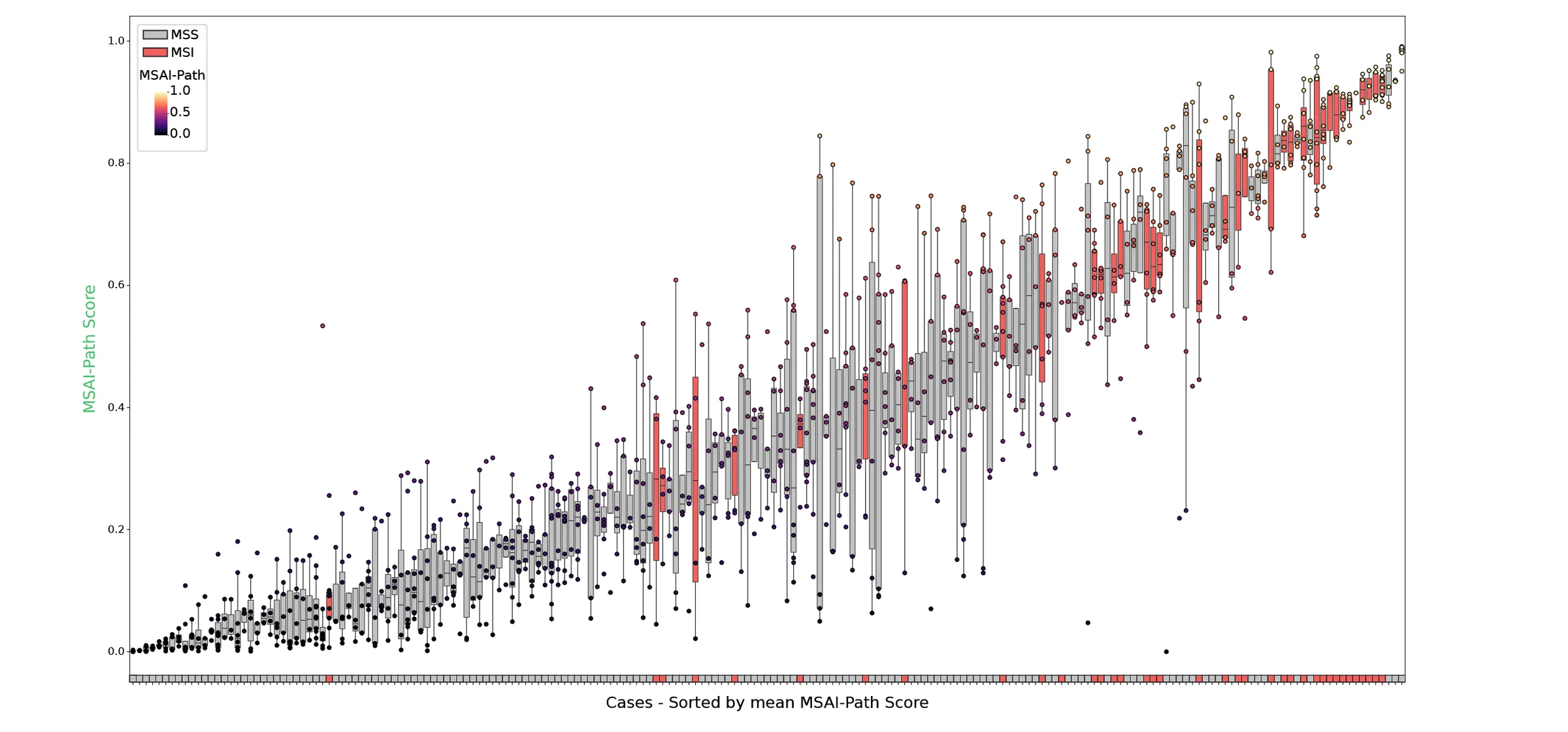
At operating points above 95% specificity, the model could substantially reduce reflex immunohistochemistry workloads. We also observed significant intrapatient heterogeneity in predicted scores across slides from the same patient, emphasizing the importance of whole-case analysis over single-slide sampling.
Figures reproduced from Baumann et al., Modern Pathology (2025), licensed under CC BY 4.0.