Aligning Computational Pathology with Clinical Practice
Pathology reporting of colorectal cancer follows the International Collaboration on Cancer Reporting (ICCR) guidelines, which define a set of 25 report elements, such as tumor grade, stage, and microsatellite instability, to be assessed for diagnosis. To support pathologists in their daily diagnostic routine, numerous computational tools have been developed over the last ten years. Yet despite excellent sensitivity and clear advantages, including time savings and reduced inter-observer variability, many of these tools never reach clinical deployment. In this systematic review, published in npj Precision Oncology, we systematically map AI tools for CRC report elements to identify the critical challenges that stand between promising algorithms and real clinical use.
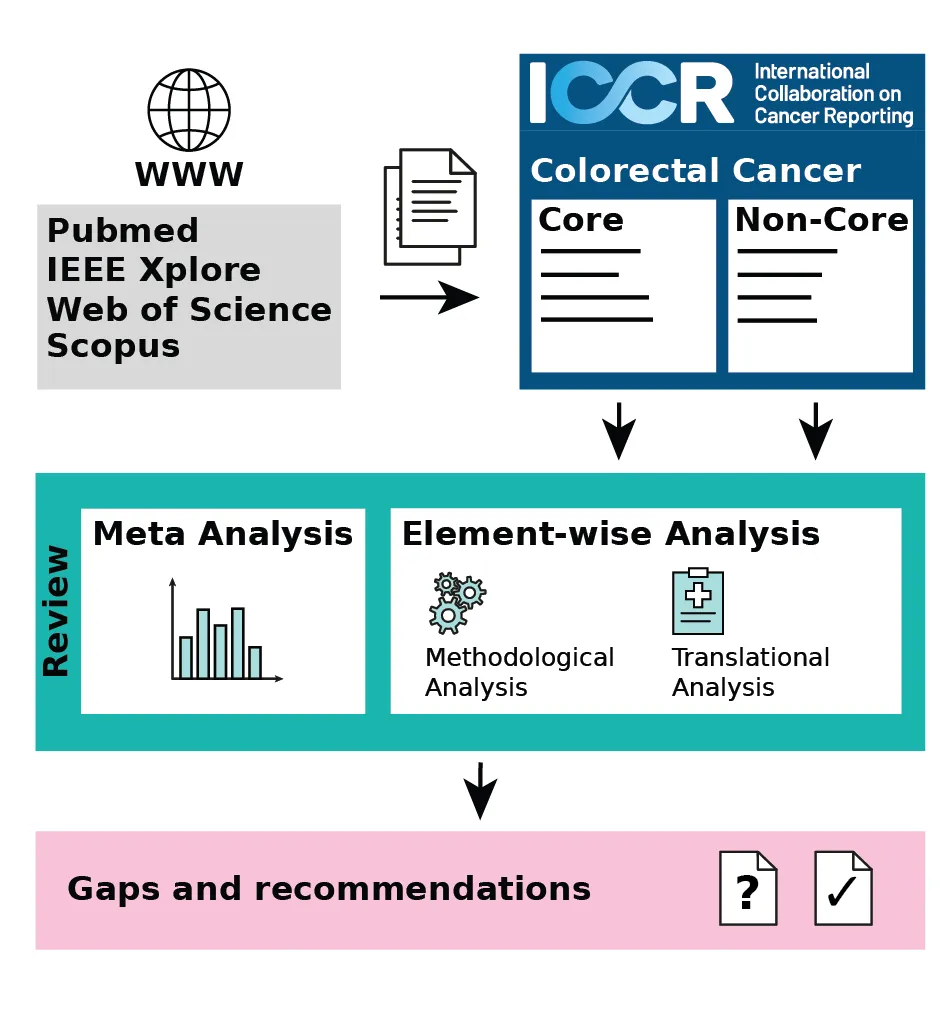
Following PRISMA guidelines, we screened 4,883 records from PubMed, IEEE Xplore, Web of Science, and Embase, ultimately including 66 studies that automatically assess ICCR report elements from H&E-stained histopathology data.
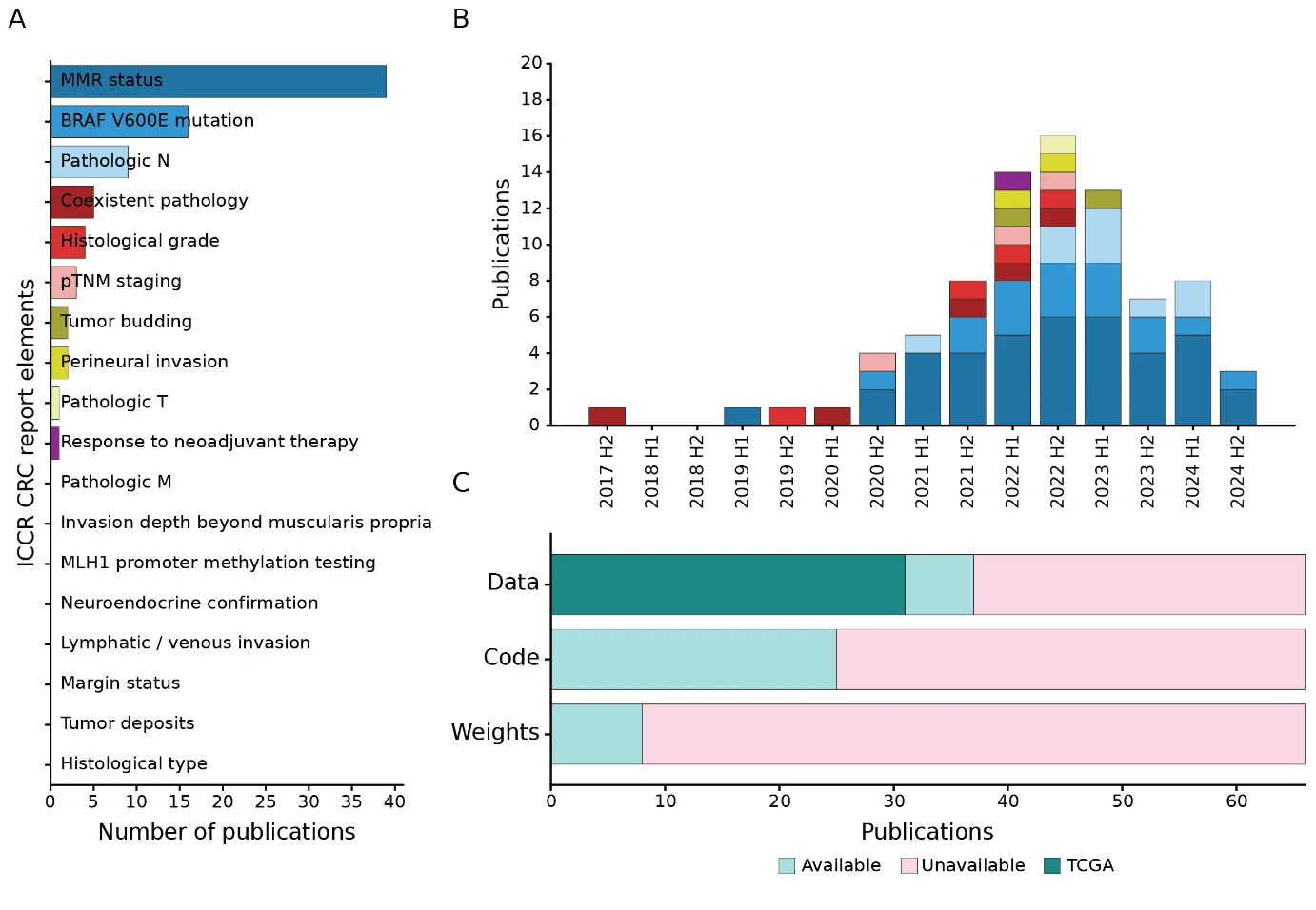
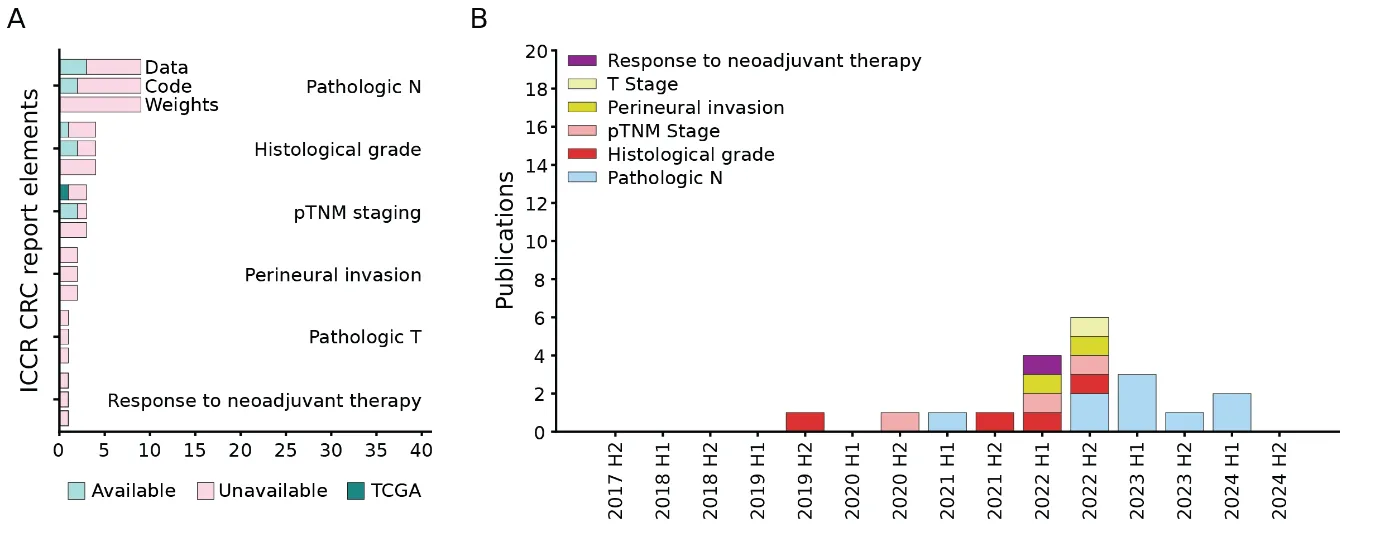
The review reveals a strong imbalance. A handful of elements, most notably MMR/MSI status, histological grade, and pTNM staging, attract the majority of research attention, while many clinically required elements remain largely unaddressed. Publication activity has grown sharply since 2021, but transparency has not kept pace: for most publications, neither data, code, nor model weights are publicly available.
Based on element-wise methodological and translational analysis, we formulate concrete gaps and recommendations covering dataset standards, validation requirements, and regulatory considerations for developing AI tools that can reliably and automatically assess ICCR elements and ultimately reach clinical deployment.
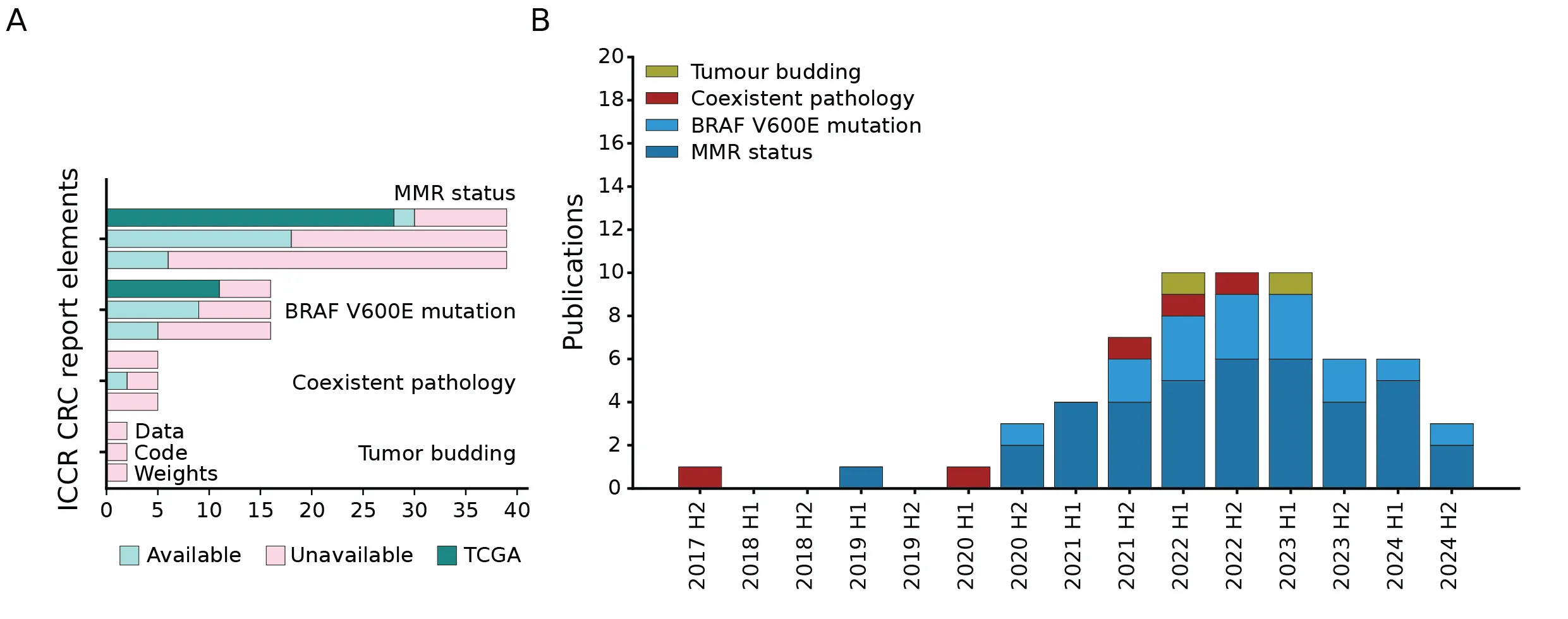
Overall, the review shows that AI tools for CRC pathology reporting have matured considerably, with strong reported performance for the most-studied elements. At the same time, the field remains fragmented: research effort is concentrated on a few report elements, many clinically required ones are neglected, and the lack of shared data, code, and trained models makes results difficult to verify or build upon. Closing these gaps through standardized datasets, external validation, and transparent publishing practices is essential if these tools are to move from promising publications into routine clinical practice.
Figures reproduced from Baumann et al., npj Precision Oncology 9:381 (2025), licensed under CC BY 4.0.